Syklus 1-4 in 12 languages
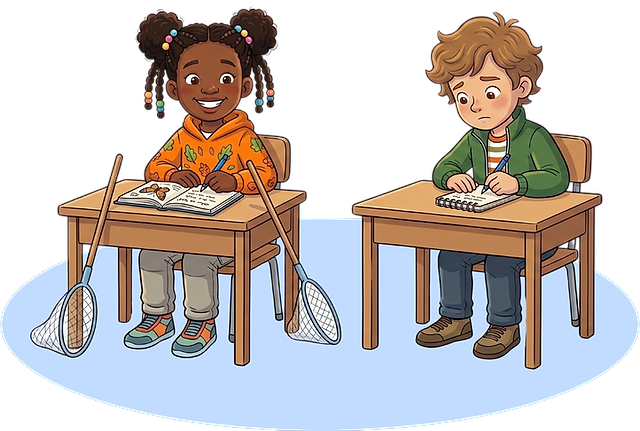
All texts in Syklus 1-4 are available in 12 languages in addition to Norwegian; Arabic, Dari, English, Kurdish (Kurmanji), Pashto, Polish, Russian, Somali, Swahili, Tigrinya, Ukrainian and Urdu. This makes it possible for students with a mother tongue other than Norwegian to read, listen and explore science in the language they speak best - at the same time as they develop the Norwegian language. Pupils whose mother tongue is Norwegian can use the learning tool without activating the language support, but will still benefit from audio support and explanations of terms along the way.
Why bilingual teaching materials?
In Norwegian primary schools, 22% of pupils have an immigrant background (Statistics Norway and the Directorate of Education). Many pupils encounter advanced science concepts for the first time while learning Norwegian. Bilingual teaching materials provide them with an academic safety net: they can understand the content, build concepts and participate in conversations – without being hindered by language barriers. Bilingual teaching materials are therefore not just about translation, but about inclusion, academic security and equal opportunities. When pupils have access to explanations in their own language, they can continue their academic progression, while learning Norwegian.
What does Syklus 1-4 consist of?
Syklus 1-4 consist of short, precise subject texts that make science understandable to all students. Films, pictures and illustrations help to explain abstract concepts. Self-instructive digital tasks provide immediate feedback. A rich teacher's guide with suggestions for practical, playful activities and printable worksheets allows for screen-aware learning sessions. This combination makes it possible to work both digitally and analogically, and gives the teacher the flexibility to vary the teaching.
Screen-aware and smart use of digital tools
In grades 1-4, digital tools should be used with care. Syklus 1-4 have therefore been developed with a clear screen awareness: digital is only used where it provides real added value. Language support, audio support and illustrated explanations of concepts are functions that digital teaching aids are particularly good at, and provide students with support exactly when they need it. At the same time, science should be an exploratory subject where students discuss, debate and reflect – not just click through content. Therefore, Syklus 1-4 combine digital and analogue elements in a way that promotes conversation and activity. Prose texts with pictures provide a calm expression, guided reading creates space for reflection and scaffolding, and suggestions for practical activities in the teacher's guide provide experiences outside the screen. In this way, Syklus 1-4 become a teaching aid that supports language, builds concepts and invites scientific exploration – with a balanced and smart use of the screen.
Guided Reading: The Key to Deep Understanding
However, a good bilingual teaching aid does not do the job alone. In order for students to get the most out of Syklus 1-4 Bilingual, guided reading is a particularly effective method. In science, guided reading is about reading to learn. As a teacher, you act as a close supporter before, during and after the reading, and model how to approach a subject text. The teacher's guide gives you a thorough introduction to the method if you are not familiar with it.
Cognitive relief and professional self-confidence
When we use Syklus 1-4 Bilingual, we give students what we call cognitive relief in professional terms. By gaining access to the subject matter in their own mother tongue, the student can start by understanding the content in their own language first. The understanding is anchored in a language they already master, and then serves as a safe scaffolding when the Norwegian professional language is to be built.
The effect in the classroom is often immediate:
• Increased participation: Students who may have sat quietly in science classes suddenly dare to raise their hands because they know what the topic is about.
• Faster concept learning: It is easier to learn the Norwegian word "mammal" when you have already linked the underlying meaning to a word in your own native language.
• A strengthened school-home collaboration: Parents get a real chance to read with, guide and discuss subjects with their children at home, regardless of their own Norwegian knowledge.