Teaching materials for Norwegian as a second language in Ukrainian and Russian!
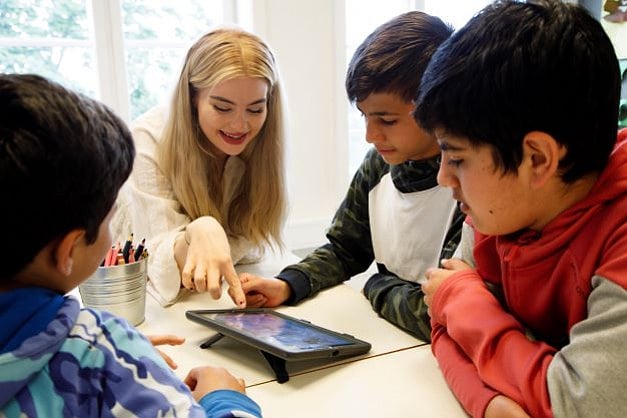
Teaching materials in Norwegian as a second language, mathematics and science adapted for Ukrainian and Russian. Kunnskap.no has translated and adapted teaching materials into Ukrainian and Russian to meet the refugee situation.
NorskPluss Children, Youth and A1-A2 are adapted for Ukrainian and Russian, to ensure a quick introduction to the Norwegian language. The teaching materials are highly interactive and contain a large number of varied tasks that are well suited for both classroom teaching and self-study.
The arrangement is supported by the Norwegian Directorate of Education.
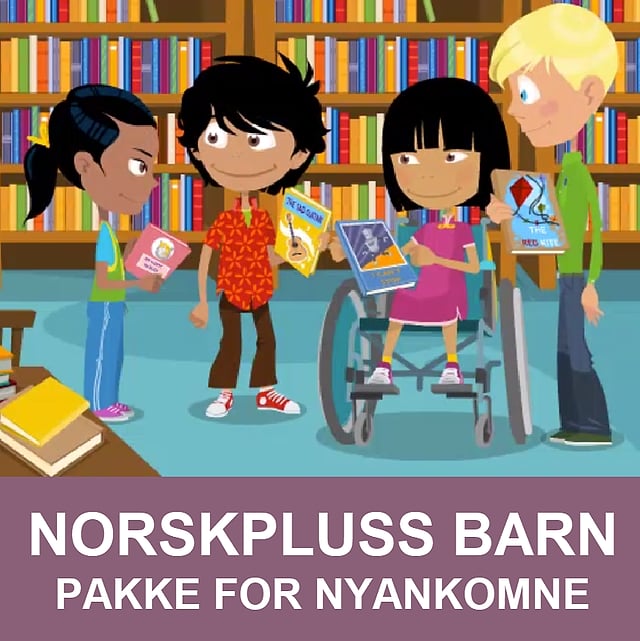
NorskPluss Children
Students seamlessly switch between languages by tapping the flags.
The teaching materials for Norwegian as a second language are prepared with Ukrainian and Russian translations. This way, Ukrainian students can learn Norwegian quickly. The text is read in Norwegian and students can access the Ukrainian translation by clicking on the Ukrainian flag.
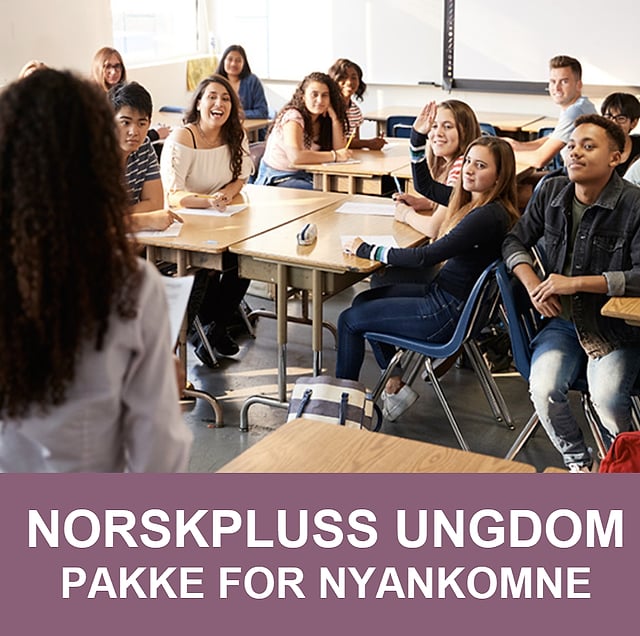
NorskPluss Youth
In the video above, students learn about Maria and answer questions about the text. They listen to the text in Norwegian by clicking on the sentence and switch seamlessly between languages by clicking on the flags. Students then work on many interactive and self-correcting tasks that relate to what they have just learned.
NorskPluss A1-A2
Basic training in Norwegian as a second language for adults also comes with the same facilities in Ukrainian and Russian.
Easy follow-up with Min.Kunnskaps learning analysis
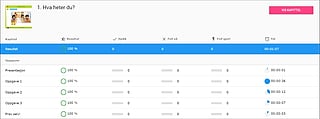
The teacher has access to all the students' answers via the learning analysis. This way, the teacher can see what level the student is at and easily follow up with guidance conversations. The learning analysis is language-independent. This makes it easy for the teacher to follow up on their newly arrived students regardless of which language the student has as their mother tongue.